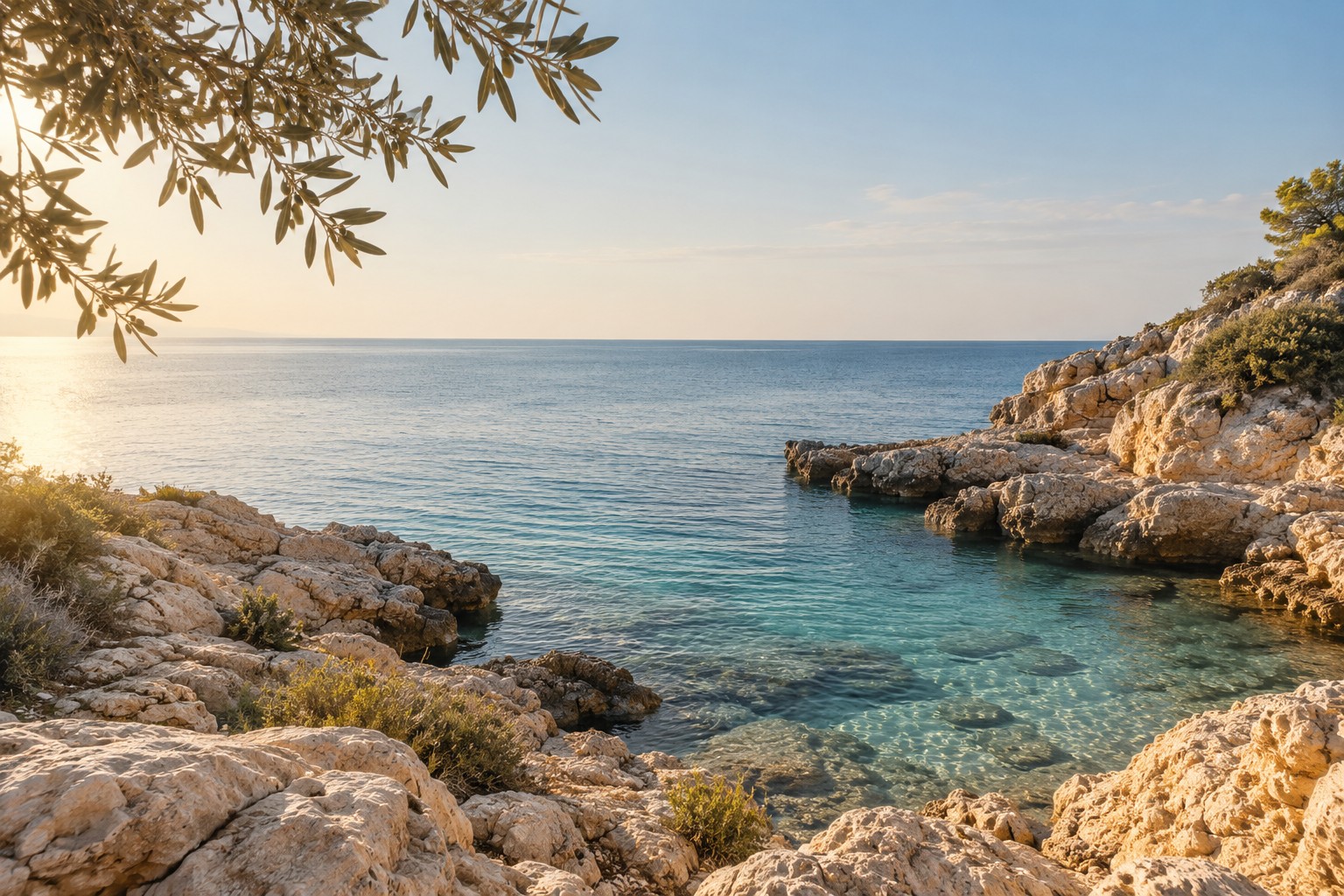
The sea does not ask us to keep up. Waves arrive and recede, light moves across the water and wind stirs the leaves. In this setting, we may notice how much hurry we carry even onto the mat. Practising close to nature can invite a different kind of attention: less concerned with an outcome and more open to what is happening right now.
A rhythm we do not have to accelerate
Watching the sea requires no achievement. We do not need to count the waves or wait for a perfect view. We can simply be beside it. This ordinary form of presence sits comfortably with yoga. Rather than immediately looking for a more demanding pose, we can notice the weight of our feet, the temperature of the air and our breath. The landscape does not judge what we can do.
That does not mean our breathing must imitate the waves. We have our own rhythms, and the sea is not always the same either. Sometimes it is almost still; sometimes it is loud and full of movement. We can let the two rhythms exist alongside each other. There is no need to synchronise them or turn this encounter into another task to complete.
Leave a little space around the practice
Daily life often teaches us to move directly from one thing to the next. We reply, make plans and check the time. Even rest can become an item on a list. Beside the water, we might leave more space between these actions. Unrolling a mat, sitting for a moment and looking at the horizon need not be preparation for something more important. They can belong to the practice itself.
Our thoughts will not necessarily become quiet at once. We may still be thinking about an unfinished conversation or the tasks waiting for us. Nature does not have to change that magically. It offers a different setting for the same thoughts. We can hear them and also notice the sound of water or light resting on a stone. Not everything requires an immediate response.
Every moment on the mat does not have to take us further. Some moments can simply let us stay.
Practice without pressure
Outdoors, conditions are not perfectly controlled. The ground may be uneven, the wind changes direction and sunlight moves across the terrace. Choose somewhere stable and comfortable, and adapt the practice to your surroundings. That might mean less movement, simpler positions or more time sitting. Changing your plan is not a failure. It can be a thoughtful response to the place you find yourself in.
A practice without pressure leaves room for curiosity. How do my hands meet the mat? Would I rather look ahead or close my eyes for a moment? When would I like to pause? These questions do not have one correct answer. You can return to them each time, whether you have five minutes to yourself or are taking part in a longer class.
Be part of the setting
The sea and plants are more than decoration for a photograph. When we practise outdoors, we are guests in a place. We can avoid disturbing others, leave no traces and remain attentive to what surrounds us. Sometimes a short walk is a better choice than unrolling a mat. Being in contact with a landscape does not require an impressive pose to feel meaningful.
Yoga can extend beyond a studio, but it does not need a trip to the coast to find a place in our lives. An open window in the morning, a nearby park or a quiet corner of a garden can suggest the same simplicity. The Mediterranean landscape is one expression of the MAREA spirit: breath, movement and life close to nature. What matters is the chance to notice your own rhythm, wherever you happen to be.