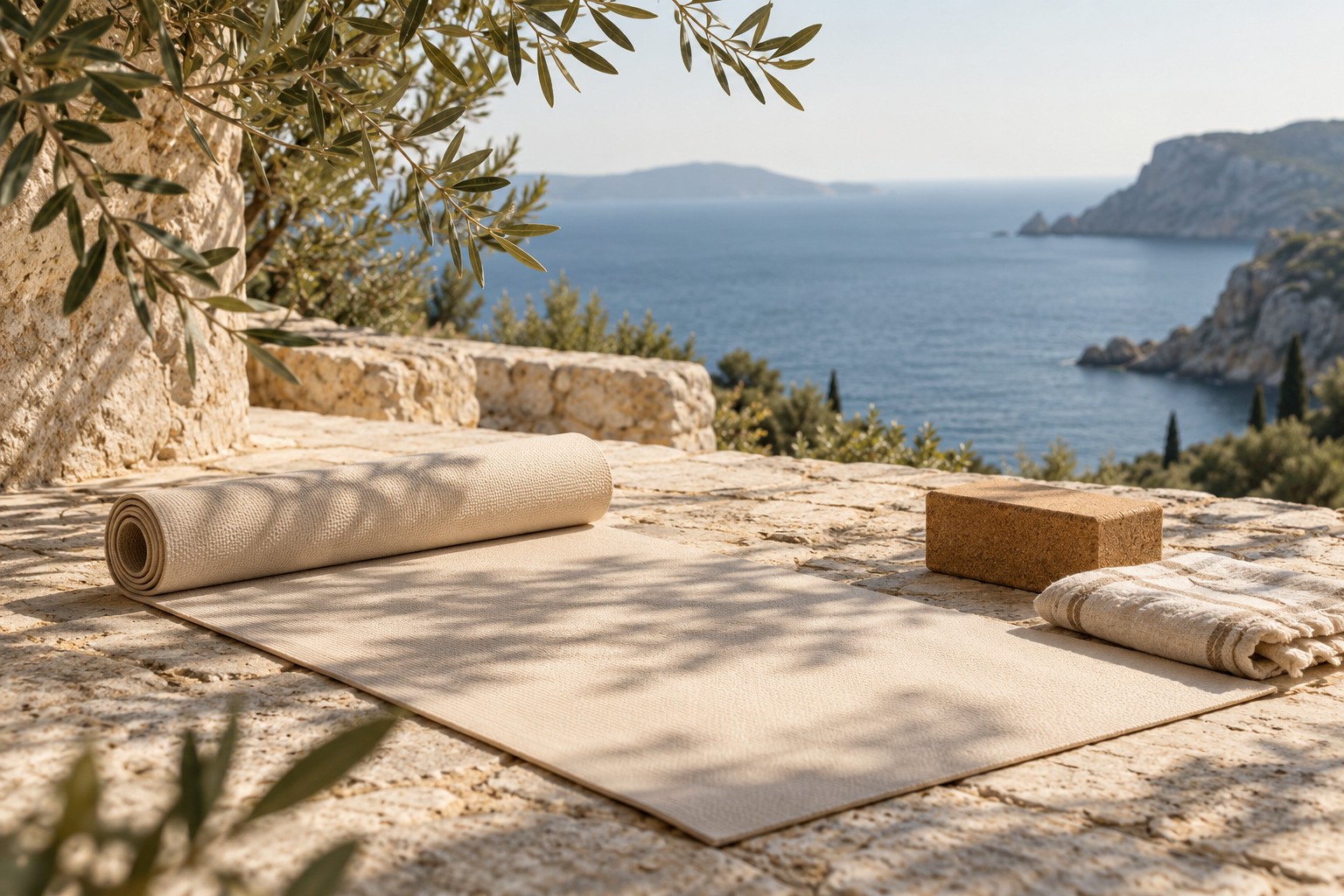
Your first encounter with yoga does not have to begin with a test of whether you can touch your toes. It can start much more simply: walking into the room, unrolling a mat and noticing your breath. You do not need to know the names of the poses or look like the people in photographs. A little curiosity and a willingness to spend some time with yourself are enough to begin.
Before you unroll your mat
A new place can bring plenty of questions. Where should you stand? Will everyone else know what to do? What if you cannot keep up? These are ordinary thoughts before a first class. Arrive a few minutes early, have a quiet look around and tell the teacher that you are new. There is no need to pretend you have experience. A short conversation can help you understand the space and find out which props are available.
It is also worth reading the class description beforehand. Different practices can have different rhythms, teaching approaches and amounts of movement. If the description leaves you unsure, ask whether the class welcomes beginners. The aim is not to find one perfect form of yoga. It is to choose a first step that gives you room for questions, experiments and your own pace.
What might a first class look like?
Classes often begin with a moment of stillness: sitting, lying down or standing comfortably. Movement follows, sometimes slowly and sometimes more fluidly. The teacher demonstrates or describes poses and transitions. There is usually space for rest towards the end. This is a general picture rather than a promise of a particular programme. Each class may take a slightly different shape.
You do not have to remember everything in your first hour. Listen to one instruction at a time: where to place your hands, how to position your feet or when to pause. If a pose name means nothing to you, let it remain a new word for now. With time, both the movements and the language become familiar. A first class is an encounter with something new, rather than an examination.
Flexibility is not an entry requirement
Being flexible is not your ticket onto the mat. Bodies have different proportions, possibilities and everyday habits. Bent knees, hands resting on a block or a smaller range of movement are all ordinary parts of practice. Your version of a pose may look different from the one beside you. That does not take away its meaning or make what you are doing less worthwhile.
Instead of comparing yourself with the next mat, notice whether you can stay attentive in the version you have chosen. You do not have to reach further because someone else does. Ask for a simpler option or take a comfortable rest. There is no obligation to attempt every suggestion. Paying attention to your own boundaries matters just as much as exploring a new movement.
Let your breath be a quiet reference point
At first, hands and feet can take up all your attention. Your breath can remind you that practice involves more than arranging your body. Notice how you are breathing without needing to correct its rhythm straight away. When instructions mention inhaling and exhaling, treat them as an invitation to observe. Every movement does not need to match every breath perfectly from the beginning.
Sometimes a pause is the most useful choice. Set ambition aside for a moment, return to a comfortable position and listen again. Moving at your own pace does not mean falling behind. It means taking part on your own terms, with respect for how you feel that day. That remains valuable even when the practice starts to feel familiar and you know more of the movements.
What should you bring to your first class?
- Comfortable clothing that lets you move freely.
- Water and a small towel, if you like to use one.
- A mat if the venue does not provide one; ask beforehand.
- An extra layer for the rest at the end.
- A few spare minutes so you can arrive without rushing.
Simply make a beginning
After the class, the moment you remember best may be very simple: an unhurried exhale, a little silence or a movement you had not tried before. There is no need to make a grand commitment immediately. Give yourself time to discover how you would like to return to the mat. For a few practical pointers before that first step, visit First time at yoga?. Begin where you are.